
How To Make Pork Lard and Beef Tallow at Home

Updated: Aug 19
This recipe actually came about because someone on TikTok asked me how I make my own pork lard. Instead of simply answering with a comment, I figured it would be easier to show the entire process in a video.
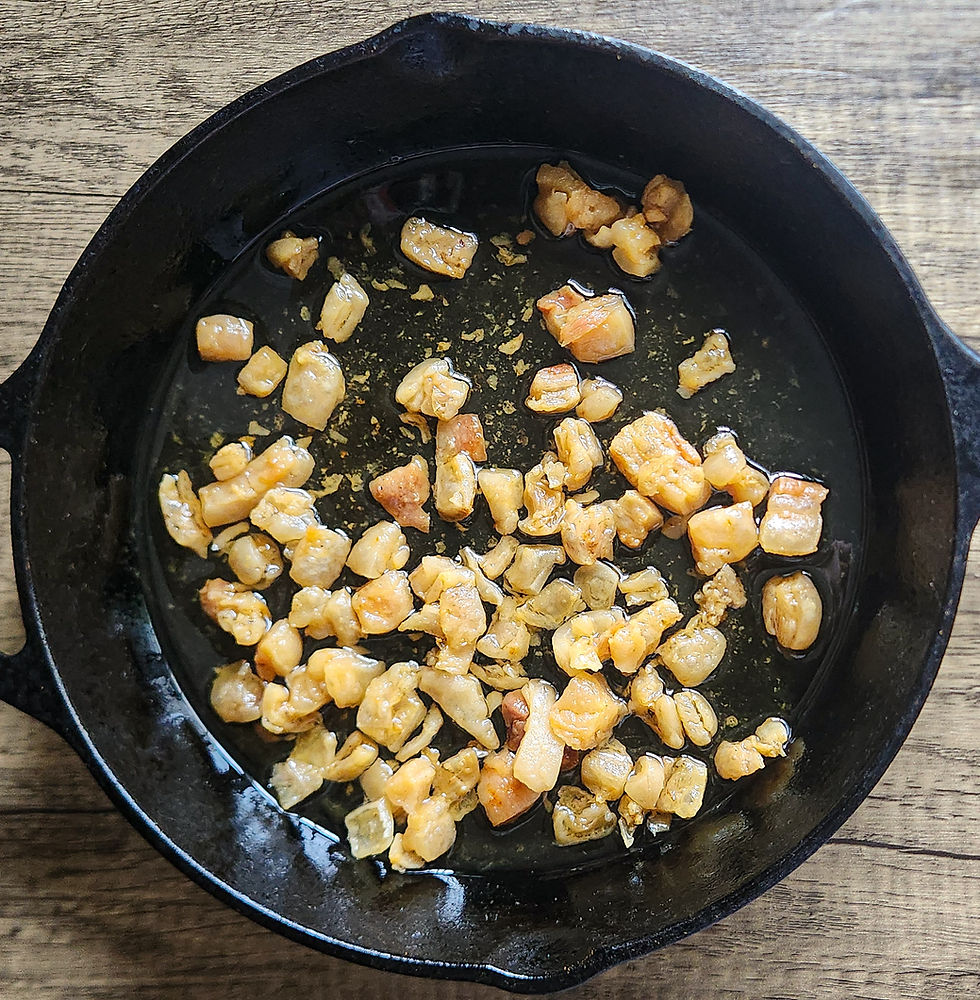
Pork Lard...
Then I thought, if I'm already rendering pork fat, why not render some beef fat at the same time? After all, both are incredibly useful in the kitchen and surprisingly easy to make at home.
Long before vegetable oils became common, animal fats were everyday cooking ingredients across much of the world. Pork lard was widely used throughout Chinese, Southeast Asian, and European cooking, while beef tallow was commonly used for roasting, frying, and even making pastries.

Beef fat before hitting the oven...
These fats weren't considered specialty ingredients back then. They were simply practical ways to make use of every part of the animal. Many traditional dishes that people still love today were originally cooked with rendered animal fats rather than modern cooking oils.
What I like most about rendering my own fats is that I know exactly what's inside. No additives, no preservatives, just pure rendered fat.
Pork lard brings incredible flavor to stir fries and noodle dishes, while beef tallow adds richness to dishes like mala stir fries. It takes a little time, but most of that time is simply letting the oven do the work.

Ingredients:
Pork Lard:
Pork Fat Sliced Into Chunks, 300g
Beef Tallow:
Beef Fat Sliced Into Chunks, 500g
Equipment:
Cast Iron Skillet / Pan
Oven
Directions:
Prepare the Pork Lard
Preheat your oven to 150°C / 300°F.
Place the pork fat into a cast iron skillet or oven-safe pan.
Add a small splash of water (about 1/4 cup) and toss to coat.
The water helps prevent the fat from sticking and scorching before it begins rendering.
Place the skillet into the oven.
Bake slowly while stirring every 20 minutes, for 1.5 hours.
As the fat renders, liquid fat will begin pooling in the pan.
Continue cooking until the sizzling slows significantly.
This means most of the moisture has evaporated and the fat has rendered.
Increase the oven temperature to 170°C / 338°F.
Continue baking until the pork cracklings become lightly golden and crispy.
Check frequently during this stage because they can burn quickly.
Remove from the oven and allow to cool slightly.
Transfer into a sterilized jar.
Prepare the Beef Tallow
Preheat your oven to 110°C / 230°F.
Place the beef fat into a cast iron skillet or oven-safe pan.
Add a small splash of water, about 1/4 cup.
Bake slowly for 3 to 4 hours.
The lower temperature allows the fat to render gently without browning too quickly.
Stir occasionally.
Once the beef fat pieces become crispy and most of the fat has rendered, remove from the oven.
Strain the liquid tallow into a sterilized jar.
Allow to cool before sealing.
Discard or save the solids as desired.
Storage
Allow both fats to cool completely before sealing.
Store in sterilized jars.
Pork lard and beef tallow can be stored in a cool place or refrigerated for longer shelf life.
Always use a clean spoon when scooping out the fat.
There is no additional cooking required after rendering.

Beef Tallow...
Tips
What To Do With Pork Lard
Pork lard is fantastic for:
Char kway teow
Fried rice
Stir-fried noodles
Scallion oil noodles
Dumpling fillings
Roasting vegetables
Chinese pastries
A spoonful of pork lard can completely transform a simple bowl of noodles.
What To Do With Beef Tallow
Beef tallow works beautifully for:
Mala stir fries
Mala hot pot bases
Roasted potatoes
Pan-fried steaks
Smash burgers
French fries
Roasted root vegetables
The beefy aroma pairs especially well with Sichuan spices.

Use these cracklings as toppings for your stir fry dishes...


Your perspective on this topic is both unique and enlightening. I appreciate the depth of research and clarity in your writing. sprunki colorshifted
What I like about eggy car is that the controls are simple, but improving your distance takes real practice. It's the kind of game that's easy to revisit during short breaks.
Rendering homemade lard and tallow is such a practical skill, and I love how simple this oven method makes the whole process. I even used GifToMP4 to turn short clips of my own fat-rendering attempts into shareable videos for friends. These pure animal fats truly elevate so many classic savory dishes!