
How to Season and Maintain a Carbon Steel Wok | My First Time with a Brand New Wok

Backstory:
I finally did it, I bought a brand new carbon steel wok.
For the longest time, I’ve been cooking with whatever pans I had. But after going deeper into Chinese cooking: fried rice, stir fries, sauces, I knew it was time to get a proper wok.
A carbon steel wok isn’t like a non-stick pan. It doesn’t come ready. You have to build it. Season it. Cook with it. And slowly, it becomes better over time.
This is my step-by-step process, what I actually did, what worked, and what I learned along the way.

Before seasoning...
A Quick History of Wok Seasoning:
Carbon steel woks have been used in Chinese cooking for centuries.
Traditionally, woks are heated over open flame, coated with oil, and used daily.
Over time, they develop a natural non-stick layer called patina, a dark, almost black surface that: prevents sticking, adds flavor, improves with every cook.
Unlike modern pans, a wok is meant to evolve.
Step-by-Step: How I Seasoned My Wok
Step 1 | Remove Factory Coating
Wash the wok with hot water and dish soap.
Scrub thoroughly to remove any factory oil or coating.
Rinse and dry completely.
This is the only time you’ll use soap aggressively.
Step 2 | Heat the Wok
Place the wok over high heat.
Move the wok around the flame so that the heat covers the entire surface.
This is especially important for a new wok so every part gets heated evenly.
Let it heat until the surface starts changing color.
You’ll see blue, gold, brown.
It is perfectly normal to have different patches and uneven shades.
This happens because different parts of the wok heat at different intensities.
Step 3 | Apply a Thin Layer of Oil
Add a small amount of oil.
Use a paper towel to spread it across the surface.
The wok should look almost dry, not oily.
Step 4 | Heat Until Lightly Smoking
Let the oil heat until it starts to smoke lightly.
Move the wok around to coat all areas evenly.
This begins forming the seasoning layer.
Step 5 | Scallion and Ginger Conditioning
Add scallions and ginger with a bit of oil.
Stir fry for 5–10 minutes.
This helps remove any metallic smell and build an even base layer.
Discard the aromatics after.
Step 6 | Cool and Wipe
Let the wok cool slightly.
Wipe clean with paper towel.
You’ll see a light brown or golden surface forming.
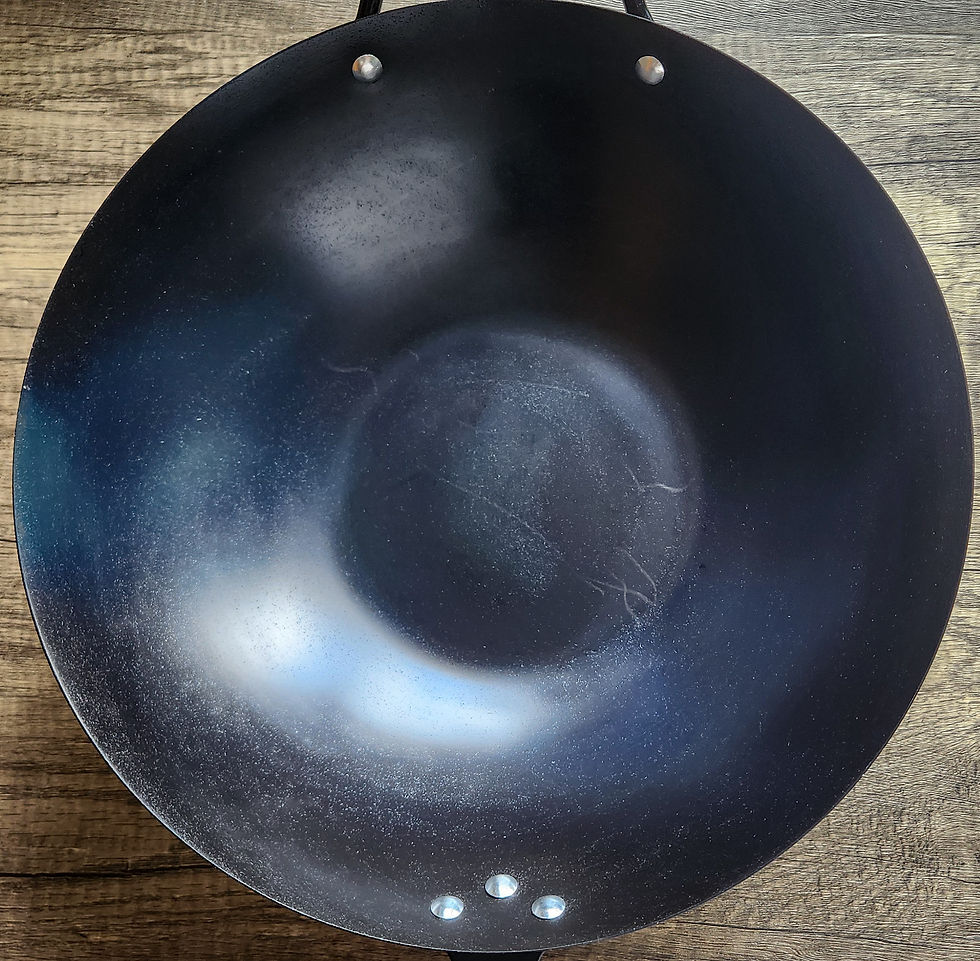
After seasoning...
What Oil Should I Use?
Use oils with a high smoke point and a neutral flavor.
Recommended Oils:
peanut oil
grapeseed oil
canola oil
vegetable oil
These oils can handle high heat and form a proper seasoning layer.
Avoid:
olive oil
butter
sesame oil
These burn too quickly and can create a sticky surface instead of a proper seasoning.
You don’t need fancy oil here, simple, neutral oil works best.
Why this matters:
seasoning = oil polymerization
low smoke point oils burn before bonding
high smoke point oils form that smooth protective layer
Building the Seasoning
Seasoning doesn’t happen once, it builds over time.
For the first few cooks, use dishes with oil:
fried rice
noodles
eggs
stir fried vegetables
Avoid acidic dishes like tomatoes or vinegar at the start.
Over time, the wok will turn:
silver → brown → dark brown → black
How I Maintain My Wok
After Every Cook
Rinse
Use hot water.
Light scrubbing is fine.
Dry with Heat
Place wok back on stove.
Heat until completely dry.
Prevents rust immediately.
Light Oil Layer
Add a small amount of oil.
Wipe until nearly dry.
This builds seasoning over time.

Stir frying aromatics...
Common Mistakes to Avoid
Using too much oil when seasoning
Letting the wok air dry
Soaking in water
Cooking acidic dishes too early
What I Learned
At first, I thought seasoning had to be perfect.
But it’s not.
uneven colors are normal
some sticking is normal
it improves with use
A wok isn’t something you “finish” seasoning.
You build it every time you cook.
Final Thoughts
After a few cooks, fried rice, stir fries, even simple vegetables, I could already feel the difference. Less sticking. Better heat. Better control. And honestly… it just feels good cooking with it.
This is just the beginning, I’ll be continuing this series as I learn more and push the wok further.


This honest, step-by-step guide to seasoning a carbon steel wok feels like a warm, personal kitchen story you’d love. The down-to-earth tone and practical lessons make it as engaging as a relatable tale from ShortStoryExamples. It’s refreshing to read about patience over perfection when building a wok’s patina.